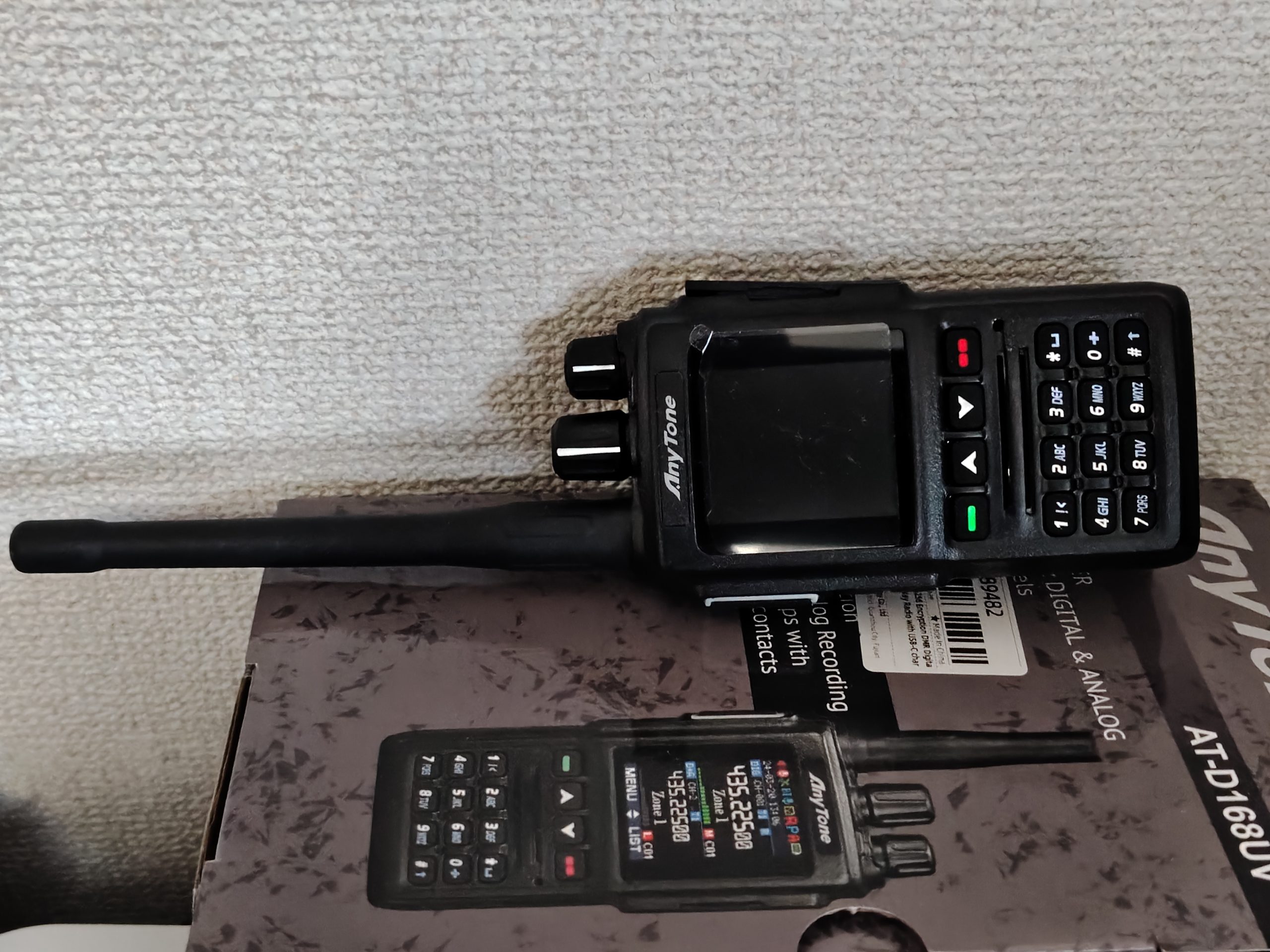
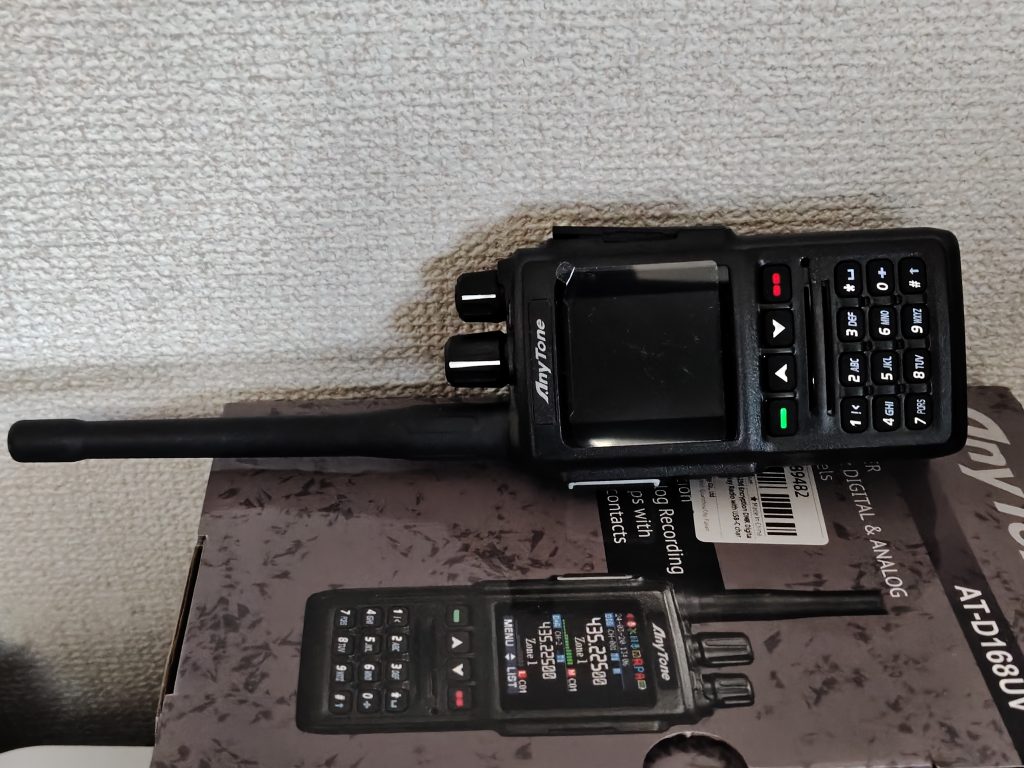
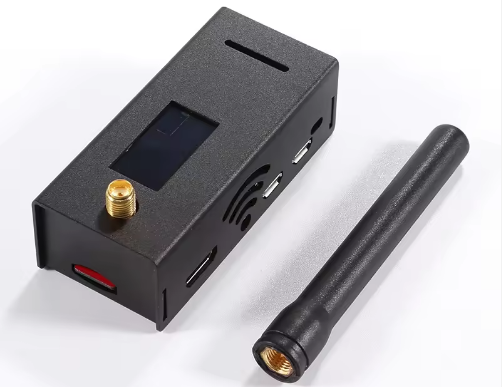
I recently bought an AnyTone AT-D168UV and plan to use it with an MMDVM hotspot for DMR and other digital modes. In Japan, radios that are not type-approved here (including imports like the AT-D168UV) must be registered with the Ministry of Internal Affairs and Communications in a special way before use. I’m going through that process and want to share the situation and my approach.
The “intra-station communication” problem
In Japan, a view has spread online that MMDVM hotspots count as “intra-station communication”—i.e. communication between transmitters of the same licensee. Under Japanese rules, intra-station communication is not permitted. Because of this, some operators register their MMDVM hotspot under a different callsign (e.g. a club station) to avoid the “same station” label.
What the Ministry says (excerpt)
The Ministry’s amateur radio FAQ (link) states that intra-station communication is not permitted. For communication experiments in the amateur bands, it instructs using a dummy load connected to your station’s radio equipment to conduct two-way experiments in a permitted way.
My approach
I will state clearly in the application that the MMDVM is used as a gateway to other stations, not for talking to my own equipment. In the remarks field I will add something like: “The [Xth] transmitter is used as a digital modulation (F7W) gateway. The communication partner is other stations via the internet (reflectors, etc.).” That way I am asserting that the MMDVM is not used for intra-station communication.
Application plan
I will apply in this order: (1) First: Under my callsign JQ3BMR, apply with both AT-D168UV and MMDVM in the same (mobile) station, with the above statement about the gateway’s partner being other stations. (2) If rejected: Reapply with dummy loads on both the MMDVM and the AT-D168UV, since the Ministry permits experiments using a dummy load. (3) If still rejected: Apply for the AT-D168UV and MMDVM as separate stations. I’ll post on this blog how the application goes.
Comments